The Legend of 'Tree King'
By Guangzhou Baowen Gardens · May 22, 2026
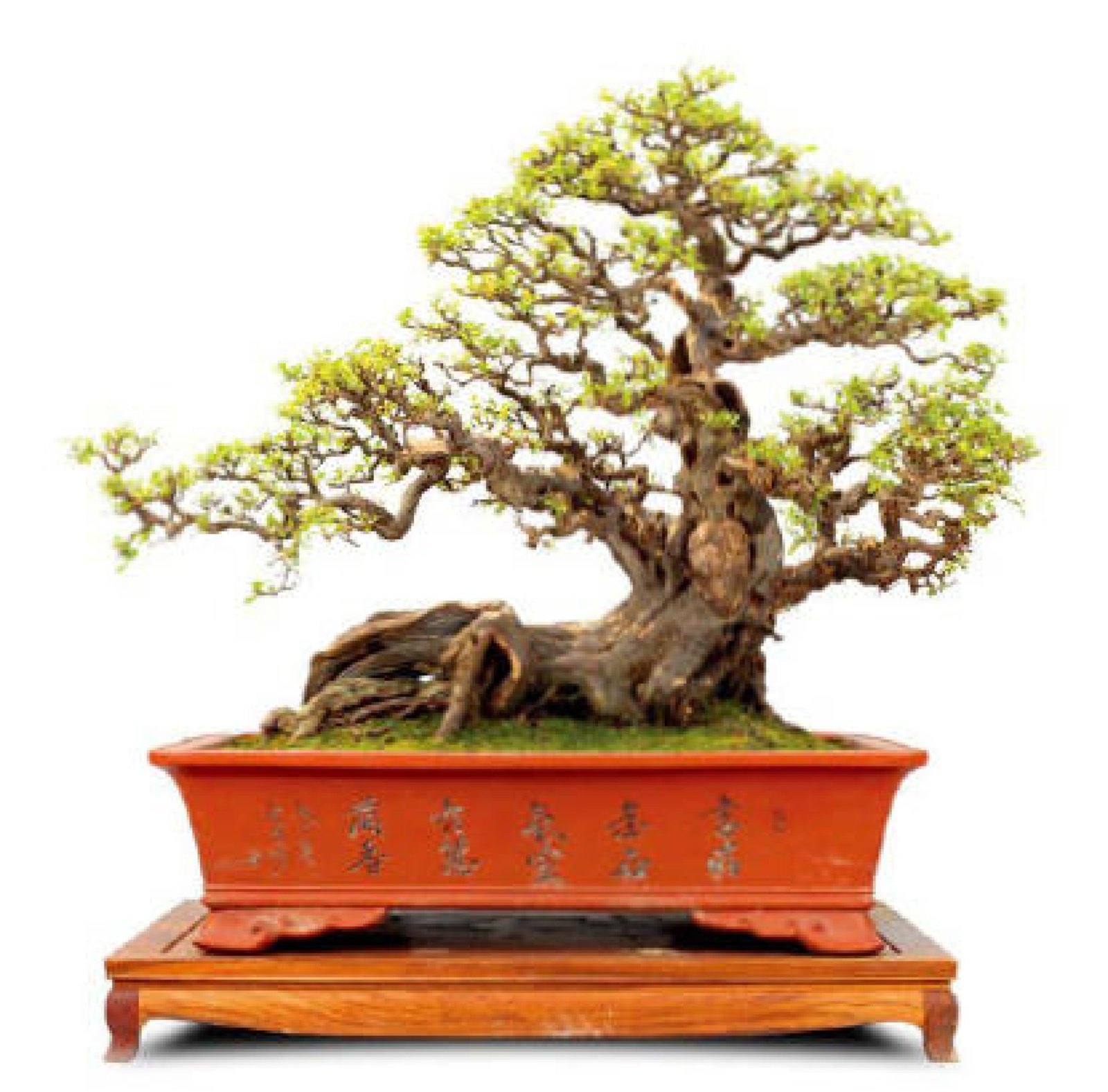
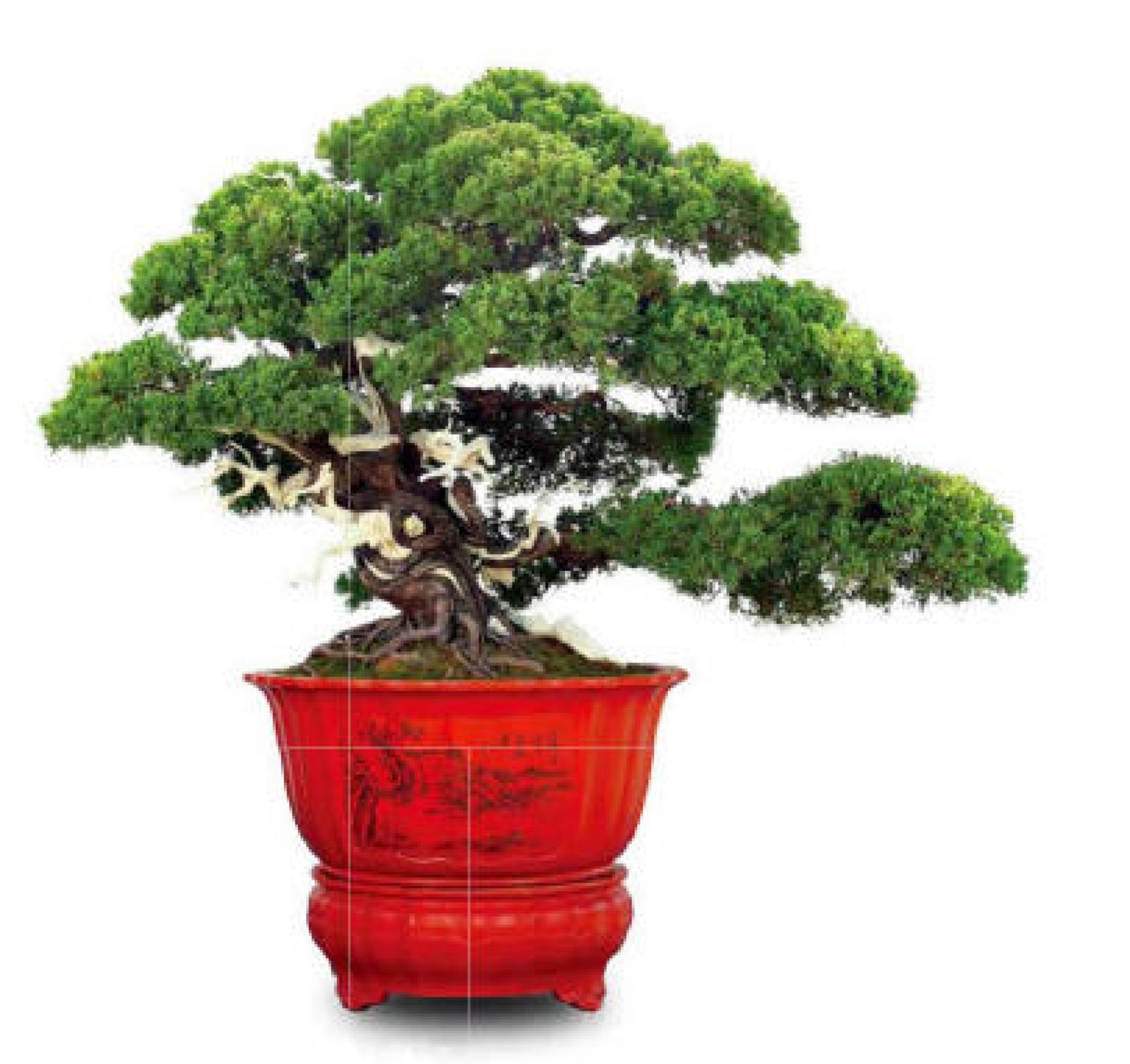
From September 30th to October 7th, 2016, the 9th China National Bonsai Exhibition and the 1st Bonsai Exhibition of Bonsai Clubs International (BCI) China Region were held in Guangzhou. This quadrennial event captured the hearts of all participating bonsai enthusiasts and left them with deep memories. Among many excellent bonsai presented in the exhibition, there are one piece that’s exceptionally stands out from the rest, which has won the title of "Tree King". This unprecedented honor received mixed reactions. Some praised it as well-deserved, while others criticized it as "lacking elegance," making the "Tree King" a hot topic of conversation. While discussions about the exhibition continued, the titled "Tree King" piece went on to win gold medals and the highest scores at the 11th Bay area & Taiwan Bonsai Art Expo in Changhua city of Taiwan in 2016, the 2nd China Cup Bonsai Competition in Yinchuan city of Ningxia province in 2017, and the International Bonsai Competition at the Beijing World Horticultural Expo in 2019.
Although the owner of the titled piece never appeared at any of the aforementioned events, he holds prominent positions in the bonsai community: President of Bonsai Clubs International, Committee Chair of BCI China Region, Committee Chair of WBFF China Region, and Honorary President of the Flowers, Penjing, and Viewing Stones Section of the Chinese Society of Landscape Architecture.
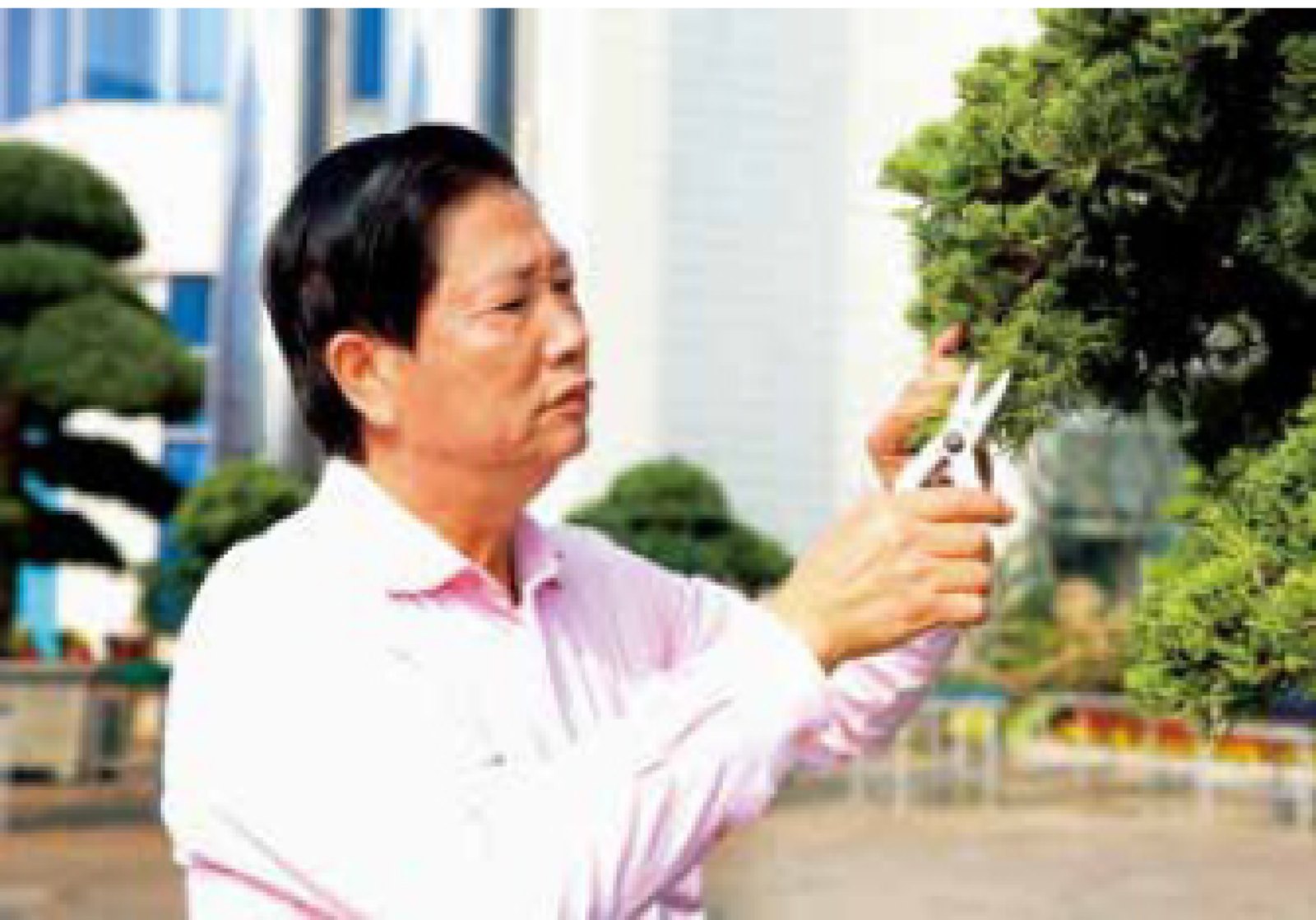
Yes, this remarkable person is Chen Chang.
1. The artistic nourishment of classical literature enlightened his eyes for beauty
The natural habitant of the Southern region of China has been famous for its strike of balance of rain and sunshine, which provide a perfect breeding ground of evergreens and plants. Being born in this region, Mr. Chen Chang has a trained eye for appreciation of nature; meanwhile, he has received training in traditional classical poetry at a young age. He loved poetry from the TANG & SONG era due to descriptive linguistic details of nature. This exposure gradually sharpened his eye for discovering beauty. He developed a deep appreciation for the beautiful scenery of nature.
"I can identify most common species of plantation and creatures, sometimes, I can even name the bird just by hearing its sound", said Chen.
This extraordinary perception came from quietly observing and understanding his natural surroundings. This deep aesthetic sense laid the foundation for his later achievements in bonsai art and other fields.
As the eldest child, Chen began supporting his family at age of 15, sacrificing his desire to study. Despite this heavy burden, the richness of his inner world remained intact. He pursued interests such as planting trees in his spare time. Chen vividly remembers his first bonsai tree: "I gave all of my first earnings from carpentry to my parents, with one buck left over as an allowance for the month. The first thing I did then was to buy a mountain kumquat tree.” From then on, he often dug up wild stumps in the mountains to plant.
Initially, Chen planted trees in his backyard. As space ran out, he moved them to the factory balcony and rooftop. "That was my little world. After dinner, I'd hide there to work on my plants. I had spent years doing that." This resilience, dedication, and practical spirit helped Chen carve out new landscapes and achievements in his business endeavors.
In 1985, Chen founded the Zhujiang Machine Tool Plant, shifting from carpentry to machinery. In 1993, he founded Chu Kong Petroleum and Natural Gas Steel Pipe Holdings and became a leading figure in the industry. With a large garden at his factory, Chen devoted his leisure time to planting trees and further immersed himself in the art of bonsai, cultivating over 3,000 bonsai trees to date.
2. A storm rider in business world with versatile hobbies
Beyond cultivating bonsai, Chen Chang's diverse interests have all blossomed into remarkable achievements. Whether it's calligraphy, raising koi fish, bird breeding, beekeeping, table tennis, or chess, Chen has excelled in each and turned these pastimes into fields of excellence.
Chen began calligraphy at the age of four and won awards for his calligraphy in middle school. He honed his skills in Ou script at the Yangcheng Calligraphy and Painting Art School, and has recently ventured into semi-cursive script. His calligraphy works are increasingly recognized and collected by calligraphy experts.
Chen's chess skills are equally impressive. As a young carpenter, he was the chess champion of the entire factories in the town. After achieving economic success, he spent a fortune to invite the world Go champions to Guangzhou for three consecutive competitions, bringing these champions together for joyous gatherings.
Chen is a highly regarded figure in the koi fish community. His koi have consistently achieved top honors in national and international competitions. One of his koi, named "Xi Shi," has won the rare "Grand Slam," winning top honors in international, Asian, and Chinese koi competitions.
Chen has served as the president of the Panyu Table Tennis Association for over 20 years, demonstrating his passion for the sport and his commitment to its growth. Thanks to his support, table tennis legends like Deng Yaping and Zhuang Zedong have visited the association for guidance, and numerous celebrities have participated in exchanges. In recognition of his significant contributions to table tennis, Chen was appointed vice president of the Guangzhou Table Tennis Association in 2013.
Dominating in his primary business and flourishing in his "secondary" hobbies, Chen's pursuits in bonsai, calligraphy, fishkeeping, and beekeeping reveal a passionate and artistic spirit beneath his serious and stern exterior as a practical businessman.
3. Following nature's example: creating miracles that rival nature
Some say that Chen Chang’s bonsai artistry is self-taught, as he never studied under a renowned master. However, Chen earnestly corrects this notion, attributing his mastery to his teacher—nature itself. Although he has long regarded bonsai cultivation as a personal hobby for self-cultivation and has never sought formal exchanges or lessons, he continuously draws inspiration and sustenance from the natural world. He candidly admits that many published works and exhibition pieces do not come close to the natural growth of trees in the wild. Whenever he encounters a tree in nature that inspires him, he will observe it closely and imprint its beauty deeply in his mind, hoping to apply these insights to his creative practice.
The phrase "having mountains and rivers in one's heart" aptly describes Chen Chang. His consistent and attentive observation of nature has filled his mind with countless vivid and beautiful tree forms. These deeply ingrained images of natural beauty provide a continual source of inspiration for his bonsai creations. When presented with a raw tree trunk waiting to be crafted, Chen deftly recalls the beautiful trees stored in his memory, selectively extracting their most striking features or synthesizing various elements to create a unique and aesthetically compelling form. This process of deriving inspiration from nature and enhancing it through artistic refinement results in bonsai works that achieve a miraculous beauty.
Chen’s love for calligraphy, especially the regular script of Ouyang Xun, significantly influences his bonsai creations. In his bonsai work, Chen integrates the brushstrokes and compositional principles of Ouyang Xun's calligraphy. This fusion imbues his bonsai trees with a more robust form, substantial lines, rigorous structure, and dramatic yet harmonious movement. The result is a series of bonsai that not only reflect natural beauty but also exude a refined artistic sensibility, capturing the essence of both nature and art.
4. Rigorous techniques: the pursuing of astonishing bonsai art
Chen Chang has often remarked that the Lingnan bonsai technique has only been developing for a few decades. Although it has established a solid foundation, it is still in a phase of integration, unification and growth. Recently, the unique charm of Lingnan bonsai has captivated enthusiasts nationwide, leading many to emulate its style. However, while enthusiasts claim to use the core technique of "Clip-and-Grow", Chen observes that their understanding and application are often superficial and incomplete. To address this, he drew on his decades of experience to write a paper entitled " The Origins of Lingnan Bonsai’s Clip-and-Grow Techniques”. He presented it at the 6th Chinese Bonsai Academic Symposium, using simple yet vivid language to provide a detailed and practical guide to the technique.
Chen believes that "Clip" (trunk cutting) and "Grow" (branch nurturing) should be discussed separately. "Clip" involves cutting off parts of the trunk that do not meet the desired shape, with the first cut being the most critical. "The first cut determines the entire life of the work," he states, as it sets the position, length, shape, and height. "Grow" refers to nurturing the new branches that sprout after cutting the trunk. "When the branches have grown to the desired thickness, they should be trimmed like the trunk, creating a second, third segment, and so on until the shape is complete." Chen advises that in addition to considering the tapering of each segment, the length must also vary, with each successive segment being shorter than the last. The key to "Clip-and-Grow" is ensuring each segment changes direction. "If any segment isn't done correctly, the entire work is ruined."
Chen's commitment to mastering and refining Lingnan bonsai techniques demonstrates his extraordinary dedication and perseverance. He acknowledges that the insights shared in his paper were hard-won, distilled from extensive experience and trial and error. For instance, he notes, "The first trunk cut is the riskiest. Trees often die after the first cut, even if they’ve been growing for over a decade." He explains that before cutting the trunk, significant amounts of sap are transported through the trunk, and suddenly cutting it causes the sap to flow out, leading to the tree's demise. Through numerous experiments, Chen discovered that cutting the roots first mitigates this risk. "Before cutting the trunk, prune one or two large roots. To be safe, do this in stages over two or three months. Once new roots have grown, then cut the trunk."
As a perfectionist, Chen holds stringent standards, especially in techniques like creating large cascading branches. He noticed that many such works have unclear angles and shadows in photographs, detracting from their visual appeal. This issue, he determined, arises from not paying attention to the direction and angle of bends. To resolve this, he photographs his work after each bending session, adjusting based on the images to ensure clarity and precision. Consequently, Chen's large cascading branches are visually striking both in person and in photographs, with every detail meticulously crafted.
Chen's commitment to rigorous creation, rejection of mediocrity, constant innovation, and pursuit of uniqueness underpins his numerous masterpieces and accolades. His relentless drive to create bonsai that astonish and impress reflects his motto: "A tree must amaze, or the work is not done."
5. Embracing a mission: advancing Chinese bonsai art
At work, Chen Chang is known for his decisive and sharp business acumen. However, in his personal interactions, he is consistently approachable, humorous, and affable, earning him the endearing nickname "Brother Chang" among his peers. When alone, he immerses himself in the arts—practicing calligraphy, playing chess, painting, and tending to his plants and fish. These activities help him relieve stress and cultivate his temperament.
From the first small withered tree he bought as a young boy to the thousands of meticulously cultivated bonsai in his collection today, Chen Chang has devoted over forty years to his passion. During this time, he has quietly immersed himself in the vibrant and bustling world of Lingnan bonsai art. If it weren't for a serendipitous discovery by the bonsai community, Chen might still be contentedly working in his own secluded garden.
In early May 2013, Chen's friend, renowned calligrapher Chen Qiuming, visited his bonsai garden "Golden Dragon Garden" at Panyu, Guangzhou. Accompanying him were leading figures in the bonsai community, including Xie Rongyao, Huang Jiuwei, and Wu Chengfa. This visit marked the first time Chen's bonsai talents were recognized by the wider bonsai community.
Chen's prowess in bonsai art and his significant influence in the field quickly became evident to his peers. Despite his initial reluctance, he was soon elected Vice President and then President of the Guangzhou Bonsai Association. He was subsequently appointed the World Bonsai Friendship Federation (WBFF) China Region Chairman, Vice Chairman and Chairman of the BCI China Region, Vice Chairman and Chairman of the Chinese Society of Landscape Architecture's Flower, Trees, Penjing and Viewing Stones Section, and Vice President of the Penjing Section of China Flower Association. In September 2013, his work was invited to the 7th WBFF and the 12th Asia-Pacific Bonsai and Viewing Stones Conventions, where it won the top honor, the "Treasure of China Award." He went on to win numerous other accolades, including the Grand Champion titles at the 10th Guangdong-Hong Kong-Macau Bonsai Art Expo, the inaugural "China Cup" Bonsai Competition in 2014, the 2015 International Bonsai Conference, and the 9th China Bonsai Exhibition, where his work was crowned "Tree King."
While winning awards brings joy, Chen is acutely aware of the responsibility he bears. To support the growth of Chinese bonsai art, he leverages his social influence and financial resources. He has generously donated to various bonsai organizations and events. In addition, Chen often provides arrangement and organizing assistance for major bonsai events, ensuring the smooth and safe execution of these activities.
At first glance, one might assume that for a prominent entrepreneur like Chen Chang, bonsai is merely a hobby or a collection. However, a deeper look into his life, scholarly writings, and artistic works reveals a different story. His commitment to excellence, practical determination, and perfectionism have allowed him to excel in multiple fields. He also has an open-hearted, philosophical approach to life and a deep love for the arts. This combination of traits has given his life a rich, vibrant, and carefree splendor.